Elevating the Consciousness of Systems – Why the Future of Governance Depends on More Than Technology
January 01, 2026 VIKAS KANUNGO Technology should not merely accelerate systems.It should elevate the consciousness that governs them. We enter […]



January 01, 2026 VIKAS KANUNGO Technology should not merely accelerate systems.It should elevate the consciousness that governs them. We enter […]
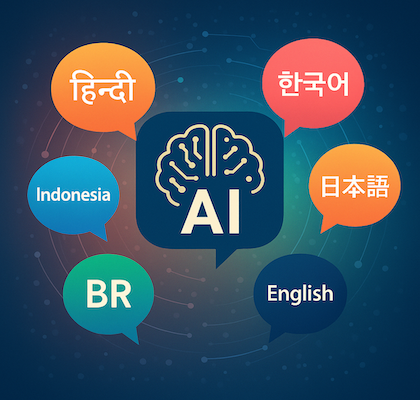
Google has expanded its AI Mode in Search to five new languages — Hindi, Indonesian, Japanese, Korean, and Brazilian Portuguese — powered by the Gemini 2.5 model. The update goes beyond translation to deliver contextual, culturally aware answers, making AI search more inclusive for billions of non-English users. For India, Hindi integration signals a breakthrough moment for startups, policymakers, and practitioners driving multilingual AI adoption.

The U.S. Federal Trade Commission has launched a 6(b) probe into AI chatbot safety, directing OpenAI, Meta, Alphabet, Snap and others to disclose youth safeguards, testing methods, data practices, and guardrails. The investigation focuses on protecting minors from harmful or manipulative outputs and building trust in consumer AI through evidence-based accountability. As companion chatbots scale across education, wellness, and customer service, the outcome will shape expectations for transparency, risk controls, and responsible deployment—keeping safety and innovation moving together.
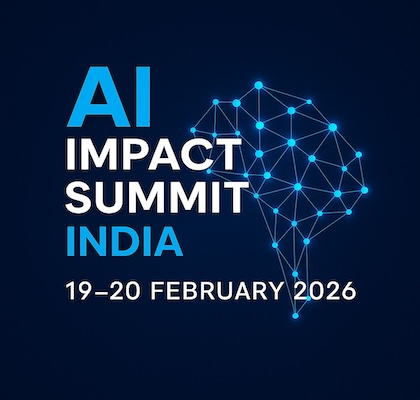
India will host the AI Impact Summit on 19–20 February 2026 at Bharat Mandapam, New Delhi, bringing together world leaders, policymakers, industry innovators, and researchers to shape the future of artificial intelligence. Anchored in the themes of People, Planet, and Progress, the Summit will focus on turning action into measurable impact across sectors like healthcare, agriculture, education, and climate resilience. Pre-summit events will run from 11 August 2025 to 31 January 2026, offering governments, startups, academia, and civil society the chance to influence the global agenda, build partnerships, and showcase solutions.
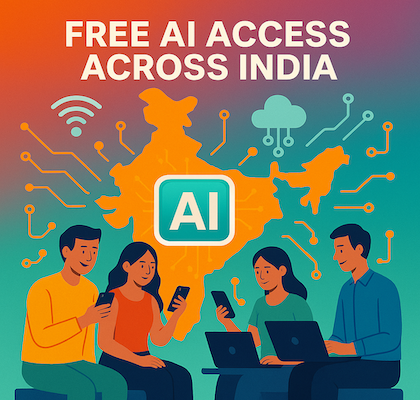
Discover how free AI access from Google and Perplexity is transforming India’s digital landscape, accelerating Digital India 2.0, empowering citizens, and driving the nation’s journey toward the Viksit Bharat 2047 vision through inclusive, technology-led growth.
As agriculture faces mounting challenges—from climate shocks to declining productivity—AI and emerging technologies are rewriting the playbook for how we grow food. This thought leadership blog explores how Maharashtra’s pioneering AI in Agriculture Policy is setting a new benchmark for states and countries alike. Drawing on global innovations in precision farming, geospatial intelligence, drone-based advisory, and AI-driven supply chains, the piece outlines a roadmap for the future of farming—intelligent, inclusive, and impact-driven. Ideal reading for policymakers, technologists, and global development leaders shaping the next green revolution.

Australia’s new Voluntary AI Safety Standard sets ten guardrails; high-risk AI proposals and Copilot trials offer a replicable model for public sector innovation.
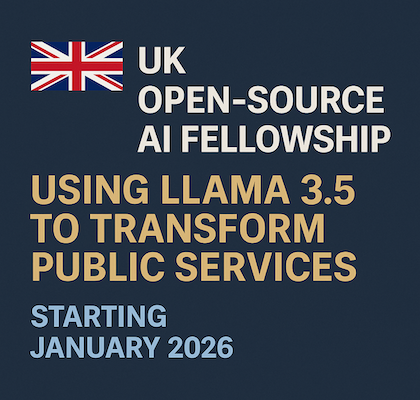
The UK government has launched a $1 million Generative AI Fellowship to embed top engineers in public departments, co-developing open-source LLM tools with Meta’s Llama 3.5. A global blueprint for responsible AI in governance.

India has expanded its AI frontier by selecting Soket AI, Gan AI, and Gnani AI to build indigenous foundation models, reinforcing its AI mission with 34,000 GPUs and robust policy support.
India is experiencing an unprecedented technological awakening, driven by artificial intelligence (AI). Anchored in the ambitious Viksit Bharat 2047 vision—which