
By Vikas Kanungo, May 03, 2025
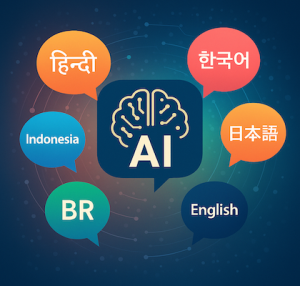
In a strategic milestone under the ₹10,000+ crore IndiaAI Mission, the Government of India has officially chosen Sarvam AI, a Bengaluru-based startup, to spearhead the creation of India’s first sovereign large language model (LLM). The model will be specifically tailored for Indian languages and optimized for voice interactions, marking a decisive step toward national AI capability and linguistic inclusivity.
Key Developments
- Strategic Selection
Sarvam AI is the first startup selected from over 400 applicants under the IndiaAI Innovation Centre initiative. The selection underscores the government’s intent to support deep tech startups that prioritize Indian language diversity and open-source AI development. - High-End Compute Access
The company will receive access to 4,096 Nvidia H100 GPUs for a six-month period. This will enable training of a 70-billion parameter model, housed on IndiaAI’s Common Compute Infrastructure—an effort to reduce dependency on foreign cloud infrastructure. - Three Model Variants
Sarvam AI plans to build three distinct models to serve varying national needs:Sarvam-Large: For high-level reasoning and content generation.Sarvam-Small: For real-time chat and customer service deployments.Sarvam-Edge: Optimized for on-device, resource-constrained environments.
- Collaboration with Academia
The project will benefit from technical collaboration with AI4Bharat at IIT Madras, one of India’s most respected research institutions in multilingual AI.
Author’s Perspective: Vikas Kanungo
India’s move to build a sovereign language model marks a strategic leap in AI autonomy and digital sovereignty. As someone deeply involved in digital public infrastructure and inclusion-focused innovation, I believe this initiative is both timely and transformative. What excites me most is not just the tech milestone—but the social potential. With voice-optimized features and a multilingual core, Sarvam AI’s models could bridge digital gaps in rural and semi-urban India, empowering citizens who are often left behind by English-centric AI systems. The real challenge now lies ahead: ensuring that ethics, fairness, and quality training data remain central to model development. But with the right frameworks in place, India could soon emerge as a global leader in culturally contextual AI.